Types of Decay
http://library.thinkquest.org/3471/alpha_decay.gif
http://images.suite101.com/323672_com_lanc2e.gif
http://www.lbl.gov/abc/wallchart/chapters/03/3.html
Tuesday, January 25, 2011

Tuesday, January 18, 2011
Wed., Jan. 19, 2011
Objectives: Begin Final Exam Review
Announcements: All late work must be completed
this week (i.e., by Friday afternoon)
Notebooks due at end of class today
Your final is on Wed., Jan. 26
Name these ions:
NO3
Cu2+
Hg 1+
PO4
C2H3O2
O2-
P3-
SO4
Name these compounds
K2SO4
PbCl4
NH4C2H3O2
Cr(PO4)2
Final Exam Review
On your own: Cumulative Review pg. 210
Each chapter has one...
Announcements: All late work must be completed
this week (i.e., by Friday afternoon)
Notebooks due at end of class today
Your final is on Wed., Jan. 26
Name these ions:
NO3
Cu2+
Hg 1+
PO4
C2H3O2
O2-
P3-
SO4
Name these compounds
K2SO4
PbCl4
NH4C2H3O2
Cr(PO4)2
Final Exam Review
On your own: Cumulative Review pg. 210
Each chapter has one...
Wednesday, January 12, 2011
Tues., Jan. 18, 2011
Objectives: Begin Final Exam Review
Announcements: All late work must be completed
this week (i.e., by Thursday afternoon)
Notebooks due at end of class today
Your final is on Wed., Jan. 26
Name these ions:
NO3
Cu2+
Hg 1+
PO4
C2H3O2
O2-
P3-
SO4
Name these compounds
K2SO4
PbCl4
NH4C2H3O2
Cr(PO4)2
Final Exam Review
On your own: Cumulative Review pg. 210
Each chapter has one...
Announcements: All late work must be completed
this week (i.e., by Thursday afternoon)
Notebooks due at end of class today
Your final is on Wed., Jan. 26
Name these ions:
NO3
Cu2+
Hg 1+
PO4
C2H3O2
O2-
P3-
SO4
Name these compounds
K2SO4
PbCl4
NH4C2H3O2
Cr(PO4)2
Final Exam Review
On your own: Cumulative Review pg. 210
Each chapter has one...
Fri., Jan. 14, 2011
Objectives: Apply skills in naming
ionic compounds
Announcements: Hand in Journals
at end of class today
No school Monday
Write the symbol for the ion formed by each
of these elements:
Zn, Se, Hg, Cu, In
Put the following pairs elements together to
form compounds:
NO3 with Ca
Cd with I
Al with S
Fe with CO3 (both)
Let's play - A chemistry card game (name?)
ionic compounds
Announcements: Hand in Journals
at end of class today
No school Monday
Write the symbol for the ion formed by each
of these elements:
Zn, Se, Hg, Cu, In
Put the following pairs elements together to
form compounds:
NO3 with Ca
Cd with I
Al with S
Fe with CO3 (both)
Let's play - A chemistry card game (name?)
Thurs., Jan. 13. 2011
Objectives: Apply skills in naming
ionic compounds
Announcements: Hand in Journals
at end of class today
No school Monday
Write the symbol for the ion formed by each
of these elements:
Zn, Se, Hg, Cu, In
Put the following pairs elements together to
form compounds:
NO3 with Ca
Cd with I
Al with S
Fe with CO3 (both)
Let's Play - A chemistry card game (name?)
ionic compounds
Announcements: Hand in Journals
at end of class today
No school Monday
Write the symbol for the ion formed by each
of these elements:
Zn, Se, Hg, Cu, In
Put the following pairs elements together to
form compounds:
NO3 with Ca
Cd with I
Al with S
Fe with CO3 (both)
Let's Play - A chemistry card game (name?)
Wed., Jan. 12, 2011
Objectives: Learn how to name ionic
compounds
Announcements: Hand in Journals
Fri. (next class)
Please have everything in there and
complete
Write the symbol for the ion formed by each
of these elements:
Al, S, Br, Mg, Zr, Fe
Put the following pairs elements together to
form compounds:
Y with NO3
Ca with I
Ga wih N
Rb with CO3
Rules for naming ionic compounds
Interactive Naming practice
compounds
Announcements: Hand in Journals
Fri. (next class)
Please have everything in there and
complete
Write the symbol for the ion formed by each
of these elements:
Al, S, Br, Mg, Zr, Fe
Put the following pairs elements together to
form compounds:
Y with NO3
Ca with I
Ga wih N
Rb with CO3
Rules for naming ionic compounds
Interactive Naming practice
Tuesday, January 11, 2011
Tues., Jan. 11, 2011
Objectives: Learn how to name ionic
compounds
Announcements: Hand in Journals
Thurs. (next class)
Please have everything in there and
complete
Write the symbol for the ion formed by each
of these elements:
Al, S, Br, Mg, Zr, Fe
Put the following pairs elements together to
form compounds:
Y with NO3
Ca with I
Ga wih N
Rb with CO3
Rules for naming ionic compounds
Interactive Naming practice
compounds
Announcements: Hand in Journals
Thurs. (next class)
Please have everything in there and
complete
Write the symbol for the ion formed by each
of these elements:
Al, S, Br, Mg, Zr, Fe
Put the following pairs elements together to
form compounds:
Y with NO3
Ca with I
Ga wih N
Rb with CO3
Rules for naming ionic compounds
Interactive Naming practice
Friday, January 7, 2011
Mon., Jan. 10, 2011
Objectives: Review of Trends and Ionic compounds
Learn to name ionic compounds
Announcments: No school next monday, 17th.
Our final is on Jan. 27 (Thurs.)
Answers to lab questions
Ionic Compound Video
Nomenclature of ionic compounds
Learn to name ionic compounds
Announcments: No school next monday, 17th.
Our final is on Jan. 27 (Thurs.)
Answers to lab questions
Ionic Compound Video
Nomenclature of ionic compounds
Wednesday, January 5, 2011
Fri., Jan. 7, 2011
Objectives: Identify patterns across and down the periodic table
Understand, denote and work with segments of the periodic table
Announcements: No late work will be accepted after
Mon., Jan 17th--including requizlets.
Final exam is on Thurs., Jan 27
Activity series of some elements

Blank table - let's identify segments of the table
Cations & Anions across the table
Ionic compounds
Polyatomic ions
Understand, denote and work with segments of the periodic table
Announcements: No late work will be accepted after
Mon., Jan 17th--including requizlets.
Final exam is on Thurs., Jan 27
Activity series of some elements

Blank table - let's identify segments of the table
Cations & Anions across the table
Ionic compounds
Polyatomic ions
Thurs., Jan. 6, 2011
Objectives: Identify patterns across and down the periodic table
Understand, denote and work with segments of the periodic table
Announcements: No late work will be accepted after
Mon., Jan 17th--including requizlets.
Final exam is on Thurs., Jan 27
Activity series of some elements
Blank table - let's identify segments of the table
Cations & Anions across the table
Ionic compounds
Polyatomic ions
Understand, denote and work with segments of the periodic table
Announcements: No late work will be accepted after
Mon., Jan 17th--including requizlets.
Final exam is on Thurs., Jan 27
Activity series of some elements
Blank table - let's identify segments of the table
Cations & Anions across the table
Ionic compounds
Polyatomic ions
Wed., Jan. 5, 2011
Objectives: Create graphs of properties of elements looking
for patterns across and down the periodic table
Understand, denote and work with segments of the periodic table
Announcements: No late work will be accepted after
Mon., Jan 17th--including requizlets.
Final exam is on Thurs., Jan 27
Create graphs of properties of the elements
Discuss questions and formulate answers
Here's the data and questions
Activity series of some elements
Blank table - let's identify segments of the table
for patterns across and down the periodic table
Understand, denote and work with segments of the periodic table
Announcements: No late work will be accepted after
Mon., Jan 17th--including requizlets.
Final exam is on Thurs., Jan 27
Create graphs of properties of the elements
Discuss questions and formulate answers
Here's the data and questions
Activity series of some elements
Blank table - let's identify segments of the table
Tuesday, January 4, 2011
Tues., Jan. 4, 2011
Objectives: Create graphs of properties of elements looking
for patterns across and down the periodic table
Understand, denote and work with segments of the periodic table
Announcements: No late work will be accepted after
Mon., Jan 17th--including requizlets.
Final exam is on Wed., Jan 26
Create graphs of properties of the elements
Discuss questions and formulate answers
Here's the data and questions
Blank table - let's identify segments of the table
for patterns across and down the periodic table
Understand, denote and work with segments of the periodic table
Announcements: No late work will be accepted after
Mon., Jan 17th--including requizlets.
Final exam is on Wed., Jan 26
Create graphs of properties of the elements
Discuss questions and formulate answers
Here's the data and questions
Blank table - let's identify segments of the table
Thursday, December 9, 2010
Mon., Jan. 3, 2011
Welcome Back!
Reactivity of Alkali Metals
Periodic Trends Activity
Reactivity of Alkali Metals
Periodic Trends Activity
- Alkali metal reactivity
- ECN - which subleves/which orbitals/
how many electrons - Ionic size
- electronegativity
- Ionization potentials
- density
Fri., Dec. 17, 2010
Chapter 5 Test
Merry Christmas!
Happy Hannuka
Pozdrevlyayu s prazdnikom Rozhdestva is Novim Godom
Gesëende Kersfees
Feliz Navidad
Joyeux Noel
Ojenyunyat Sungwiyadeson honungradon nagwutut. Ojenyunyat osrasay
Froehliche Weihnachten
Happy Festivus for the restuvus
Merry Christmas!
Happy Hannuka
Pozdrevlyayu s prazdnikom Rozhdestva is Novim Godom
Gesëende Kersfees
Feliz Navidad
Joyeux Noel
Ojenyunyat Sungwiyadeson honungradon nagwutut. Ojenyunyat osrasay
Froehliche Weihnachten
Happy Festivus for the restuvus
Thurs., Dec. 16, 2010
Chapter 5 Test
Merry Christmas!
Happy Hannuka
Pozdrevlyayu s prazdnikom Rozhdestva is Novim Godom
Gesëende Kersfees
Feliz Navidad
Joyeux Noel
Ojenyunyat Sungwiyadeson honungradon nagwutut. Ojenyunyat osrasay
Froehliche Weihnachten
Happy Festivus for the restuvus
Merry Christmas!
Happy Hannuka
Pozdrevlyayu s prazdnikom Rozhdestva is Novim Godom
Gesëende Kersfees
Feliz Navidad
Joyeux Noel
Ojenyunyat Sungwiyadeson honungradon nagwutut. Ojenyunyat osrasay
Froehliche Weihnachten
Happy Festivus for the restuvus
Wed., Dec. 15, 2010
Objectives: Review chapter 5 & prepare for Chapter test
Announcement: Chapter 5 test this Fri.
Excited states vs. ground states for atoms/electrons
Excited states for Bohr atom vs. electron cloud model
Electromagnetic spectrum & light
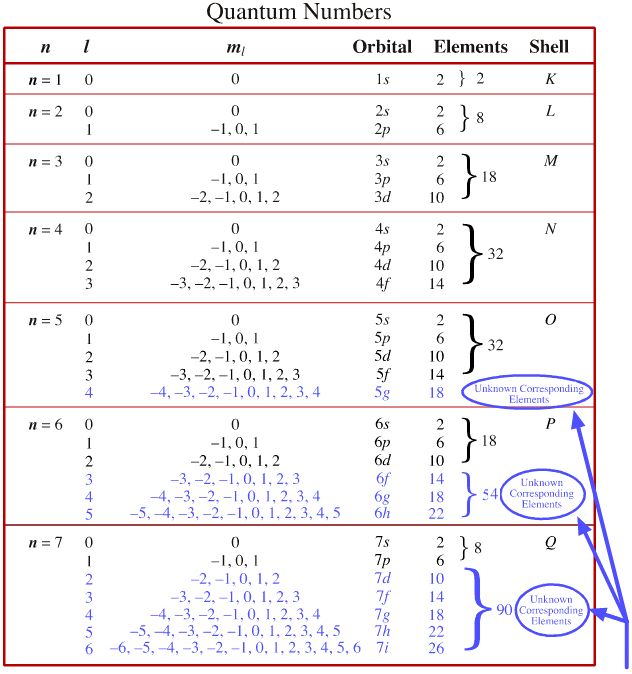
Quantum model, quantum numbers
sublevels & orbitals
3 fundamental principles/rules for specifying electron "states"
electron configuration
Announcement: Chapter 5 test this Fri.
Excited states vs. ground states for atoms/electrons
Excited states for Bohr atom vs. electron cloud model
Electromagnetic spectrum & light
Quantum model, quantum numbers
sublevels & orbitals
3 fundamental principles/rules for specifying electron "states"
electron configuration
Tues., Dec. 14, 2010
Objectives: Review chapter 5 & prepare for Chapter test
Announcement: Chapter 5 test this Thurs.
Excited states vs. ground states for atoms/electrons
Excited states for Bohr atom vs. electron cloud model
Electromagnetic spectrum & light
Quantum model, quantum numbers
sublevels & orbitals
3 fundamental principles/rules for specifying electron "states"
electron configuration
Announcement: Chapter 5 test this Thurs.
Excited states vs. ground states for atoms/electrons
Excited states for Bohr atom vs. electron cloud model
Electromagnetic spectrum & light
Quantum model, quantum numbers
sublevels & orbitals
3 fundamental principles/rules for specifying electron "states"
electron configuration
Mon., Dec. 13, 2010


Objectives: Review chapter 5 & prepare for Chapter test
Announcement: Chapter 5 test this Thurs./Fri.
Bohr Model
Electon Cloud Model/Quantum Model & Schrodinger
Schrodinger's Equations

Shapes of orbitals
ground state vs. excited states
EM Spectrum
Fri., Dec. 10, 2010
Objectives: Demonstrate the ability to write
ECNs for any element
Explain how EC relates to emission spectra of elements
Announcements: Unit Test on Chapter 5
on Thurs., Dec. 16
No Monday quizlet
Review electron configurations
Review shortcuts
Hund's Rule and Pauli Exclusion Principle
Quantum Numbers1
Quantum numbers2
Heisenberg Uncertainty Principle
ECNs for any element
Explain how EC relates to emission spectra of elements
Announcements: Unit Test on Chapter 5
on Thurs., Dec. 16
No Monday quizlet
Review electron configurations
Review shortcuts
Hund's Rule and Pauli Exclusion Principle
Quantum Numbers1
Quantum numbers2
Heisenberg Uncertainty Principle
Thurs., Dec. 9, 2010
Objectives: Demonstrate the ability to write
ECNs for any element
Explain how EC relates to emission spectra of elements
Announcements: Unit Test on Chapter 5
on Thurs., Dec. 16
No Monday quizlet
Review electron configurations
Review shortcuts
Hund's Rule and Pauli Exclusion Principle
Quantum Numbers1
Quantum numbers2
Heisenberg Uncertainty Principle
ECNs for any element
Explain how EC relates to emission spectra of elements
Announcements: Unit Test on Chapter 5
on Thurs., Dec. 16
No Monday quizlet
Review electron configurations
Review shortcuts
Hund's Rule and Pauli Exclusion Principle
Quantum Numbers1
Quantum numbers2
Heisenberg Uncertainty Principle
Wednesday, December 8, 2010
Wed., Dec. 8, 2010
Objectives: Have a deeper understanding
of how electrons are arranged in atoms
Announcements: Chapter 5 test on Friday (12/17)
No quizlet that week
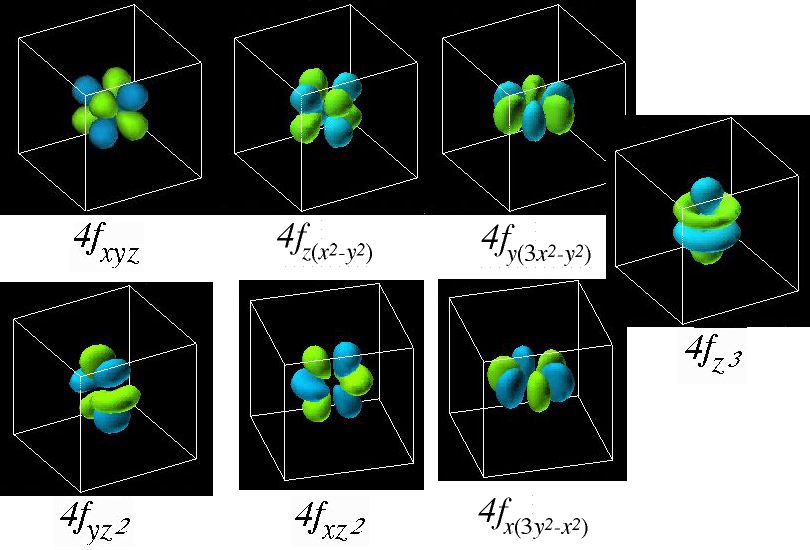
Remember the shapes of the orbits?
What about these?
Principal energy levels
Writing electron configurations
The Aufbau Principle
Hund's Rule
Energy Chart
How do I construct this chart from scratch?
Pauli Exclusion principle
of how electrons are arranged in atoms
Announcements: Chapter 5 test on Friday (12/17)
No quizlet that week
Remember the shapes of the orbits?
What about these?
Principal energy levels
Writing electron configurations
The Aufbau Principle
Hund's Rule
Energy Chart
How do I construct this chart from scratch?
Pauli Exclusion principle
Tuesday, November 30, 2010
Tues., Dec. 7, 2010
Objectives: Have a deeper understanding
of how electrons are arranged in atoms
Announcements: Chapter 5 test on Tuesday (12/14)
No quizlet that week
Principal energy levels
Writing electron configurations
The Aufbau Principle
Hund's Rule
Energy Chart
How do I construct this chart from scratch?
Pauli Exclusion principle
of how electrons are arranged in atoms
Announcements: Chapter 5 test on Tuesday (12/14)
No quizlet that week
Principal energy levels
Writing electron configurations
The Aufbau Principle
Hund's Rule
Energy Chart
How do I construct this chart from scratch?
Pauli Exclusion principle
Mon., Dec. 6, 2010
Quizlet #5 on Quantum model of the atom,
orbitals & sub-levels and connection to the
periodic table of elements
orbitals & sub-levels and connection to the
periodic table of elements
Fri., Dec. 3, 2010
Objectives: Identify Mystery gases and
calculate frequencies & energies of mercury
spectral lines
Announcements: Quizlet #5 next this coming
Monday on Quantum model of the atom,
Orbitals, sub-levels and connection to the
periodic table of elements.
Review quizlet topics
Multi-labs, equations and examples
Show me your graph, the gases you identified &
your calculations
Begin Flame test lab
calculate frequencies & energies of mercury
spectral lines
Announcements: Quizlet #5 next this coming
Monday on Quantum model of the atom,
Orbitals, sub-levels and connection to the
periodic table of elements.
Review quizlet topics
Multi-labs, equations and examples
Show me your graph, the gases you identified &
your calculations
Begin Flame test lab
Thurs., Dec. 2, 2010
Objectives: Identify Mystery gases and
calculate frequencies & energies of mercury
spectral lines
Announcements: Quizlet #5 next this coming
Monday on Quantum model of the atom,
Orbitals, sub-levels and connection to the
periodic table of elements.
Review quizlet topics
Multi-labs, equations and examples
Show me your graph, the gases you identified &
your calculations
Begin Flame test lab
calculate frequencies & energies of mercury
spectral lines
Announcements: Quizlet #5 next this coming
Monday on Quantum model of the atom,
Orbitals, sub-levels and connection to the
periodic table of elements.
Review quizlet topics
Multi-labs, equations and examples
Show me your graph, the gases you identified &
your calculations
Begin Flame test lab
Wed., Dec. 1, 2010
energies
Announcements: Quizlet #5 next this coming
Monday on Quantum model of the atom,
Orbitals, sub-levels and connection to the
periodic table of elements.
Wave notes & relationships
Multi-labs, equations and examples
Thursday, November 18, 2010
Tues., Nov. 31, 2010
Objectives: Wave relationships & calculating
energies
Announcements: Quizlet #5 next this coming
Monday on Quantum model of the atom,
Orbitals, sub-levels and connection to the
periodic table of elements.
Wave notes & relationships
Multi-labs, equations and examples
energies
Announcements: Quizlet #5 next this coming
Monday on Quantum model of the atom,
Orbitals, sub-levels and connection to the
periodic table of elements.
Wave notes & relationships
Multi-labs, equations and examples
Mon., Nov. 29, 2010
Welcome back!
Objectives:Understand the relationship between
color, wavelength & frequency of light waves
Calculate the energy carried in EM waves
based on their frequency or wavelength
Grades/Notebooks/Assignments
The EM Spectrum
Wave relationships
Objectives:Understand the relationship between
color, wavelength & frequency of light waves
Calculate the energy carried in EM waves
based on their frequency or wavelength
Grades/Notebooks/Assignments
The EM Spectrum
Wave relationships
Fri., Nov. 19, 2010
Objectives: Evaluation
Spctroscopes - elemental analysis
Get me your journal
Finish up all assignments
Complete your spectroscope
Calibrate it
Use it to analyze mystery gases
Mercury Spectrum:
-----------Violet----404 nm
-----------Blue-----436 nm
-----------Green---546 nm
-----------Yellow--579 nm (actually4 yellows centered here)
-----------Orange--615 nm
-----------Red-----691 nm
Elemental Analysis: Access one of the following...
tinyurl.com/shafferspectra
tinyurl.com/shafferspectra2
tinyurl.com/shafferspectra3
tinyurl.com/shafferspectra4
Spctroscopes - elemental analysis
Get me your journal
Finish up all assignments
Complete your spectroscope
Calibrate it
Use it to analyze mystery gases
Mercury Spectrum:
-----------Violet----404 nm
-----------Blue-----436 nm
-----------Green---546 nm
-----------Yellow--579 nm (actually4 yellows centered here)
-----------Orange--615 nm
-----------Red-----691 nm
Elemental Analysis: Access one of the following...
tinyurl.com/shafferspectra
tinyurl.com/shafferspectra2
tinyurl.com/shafferspectra3
tinyurl.com/shafferspectra4
Thurs., Nov. 18, 2010
Objectives: Evaluation
Spctroscopes - elemental analysis
Get me your journal
Finish up all assignments
Complete your spectroscope
Calibrate it
Use it to analyze mystery gases
Mercury Spectrum:
-----------Violet----404 nm
-----------Blue-----436 nm
-----------Green---546 nm
-----------Yellow--579 nm (actually4 yellows centered here)
-----------Orange--615 nm
-----------Red-----691 nm
Elemental Analysis: Access one of the following...
tinyurl.com/shafferspectra
tinyurl.com/shafferspectra2
tinyurl.com/shafferspectra3
tinyurl.com/shafferspectra4
Spctroscopes - elemental analysis
Get me your journal
Finish up all assignments
Complete your spectroscope
Calibrate it
Use it to analyze mystery gases
Mercury Spectrum:
-----------Violet----404 nm
-----------Blue-----436 nm
-----------Green---546 nm
-----------Yellow--579 nm (actually4 yellows centered here)
-----------Orange--615 nm
-----------Red-----691 nm
Elemental Analysis: Access one of the following...
tinyurl.com/shafferspectra
tinyurl.com/shafferspectra2
tinyurl.com/shafferspectra3
tinyurl.com/shafferspectra4
Tuesday, November 9, 2010
Wed., Nov. 17, 2010
Objectives: Create your own spectroscope
Announcements: Give me your notebook/
journal during class
Build your spectrocopes and check out the spectrum
of the mercury tube and the unknown mystery gas

Announcements: Give me your notebook/
journal during class
Build your spectrocopes and check out the spectrum
of the mercury tube and the unknown mystery gas

Tues., Nov. 6, 2010
Objectives: Create your own spectroscope
Announcements: Give me your notebook/
journal during class
Build your spectrocopes and check out the spectrum
of the mercury tube and the unknown mystery gases.
Announcements: Give me your notebook/
journal during class
Build your spectrocopes and check out the spectrum
of the mercury tube and the unknown mystery gases.
Mon., Nov. 15, 2010
Objectives: Learn how to create a spectroscope
Announcements: Normal schedule this week Last
week before grades (Mon., 11/22) I will evaluate
notebooks next class Cereal boxes!


Creating a cereal box spectroscope
Announcements: Normal schedule this week Last
week before grades (Mon., 11/22) I will evaluate
notebooks next class Cereal boxes!


Creating a cereal box spectroscope
Fri., Nov. 13, 2010
Objectives: Different types of bonds
Describe how the Bohr Model explains atomic spectra
Announcements: Bring an empty cereal-type box
Finish lab questions; discussion
About the types of bonds
Where are the electrons?
Bohr Model of the atom
Energy Levels
Atomic Orbitals & Electron configurations
s-type sublevels
p-type sublevels
d-type sublevels
f-type?
The Rest of the orbitals
PTE - grouped by sublevels
Flame Test & Atomic spectra lab
Electromagnetic spectrum
Describe how the Bohr Model explains atomic spectra
Announcements: Bring an empty cereal-type box
Finish lab questions; discussion
About the types of bonds
Where are the electrons?
Bohr Model of the atom
Energy Levels
Atomic Orbitals & Electron configurations
s-type sublevels
p-type sublevels
d-type sublevels
f-type?
The Rest of the orbitals
PTE - grouped by sublevels
Flame Test & Atomic spectra lab
Electromagnetic spectrum

Thursday, November 4, 2010
Wed., Nov. 10, 2010
Objectives: Different types of bonds
Describe how the Bohr Model explains atomic spectra
Announcements: Bring an empty cereal-type box
Finish lab questions; discussion
About the types of bonds
Where are the electrons?
Bohr Model of the atom
Energy Levels
Atomic Orbitals & Electron configurations
s-type sublevels
p-type sublevels
d-type sublevels
f-type?
PTE - grouped by sublevels
Flame Test & Atomic spectra lab
Electromagnetic spectrum
Describe how the Bohr Model explains atomic spectra
Announcements: Bring an empty cereal-type box
Finish lab questions; discussion
About the types of bonds
Where are the electrons?
Bohr Model of the atom
Energy Levels
Atomic Orbitals & Electron configurations
s-type sublevels
p-type sublevels
d-type sublevels
f-type?
PTE - grouped by sublevels
Flame Test & Atomic spectra lab
Electromagnetic spectrum
Tues., Nov. 9, 2010
NORMAL ODD DAY!
Objectives: Discover how substances differ
Announcements: No school Thursday!
Bonding Lab
Electron stuff
Bohr model
Electron configuration
Objectives: Discover how substances differ
Announcements: No school Thursday!
Bonding Lab
Electron stuff
Bohr model
Electron configuration
Mon., Nov. 8, 2010
EVEN DAY!
Objectives:
Announcements: No school Thurday!
Bonding Lab
Electron stuff
Bohr model
Electron configuration
Objectives:
Announcements: No school Thurday!
Bonding Lab
Electron stuff
Bohr model
Electron configuration
Sunday, October 31, 2010
Fri., Nov. 5, 2010
Return notebooks
Unit test - You may use your notebooks
Homework for the coming week:
Unit test - You may use your notebooks
Homework for the coming week:
Thurs., Nov. 4, 2010
Return notebooks
Unit test - You may use your notebooks
Homework for the coming week:
Unit test - You may use your notebooks
Homework for the coming week:
Wed., Nov. 3, 2010
Objectives: Prepare for unit test next class
Announcement: Leave notebooks with me at end of class
Working atomic mass problems "backwards"
Other modes of decay
Table of the nuclides
More about half-life & decay
Fission
fission vs. fusion
Fusion
Where does the energy come from?
Practice test in your book
Chapter 4 test prep answers
Chapter 25 test prep answers
Announcement: Leave notebooks with me at end of class
Working atomic mass problems "backwards"
Other modes of decay
Table of the nuclides
More about half-life & decay
Fission
fission vs. fusion
Fusion
Where does the energy come from?
Practice test in your book
Chapter 4 test prep answers
Chapter 25 test prep answers
Tues., Nov. 2, 2010
Objectives: Prepare for unit test next class
Announcement: Leave notebooks with me at end of class
Working atomic mass problems "backwards"
Other modes of decay
Table of the nuclides
More about half-life & decay
Fission
fission vs. fusion
Fusion
Where does the energy come from?
Practice test in your book
Chapter 4 test prep answers
Chapter 25 test prep answers
Announcement: Leave notebooks with me at end of class
Working atomic mass problems "backwards"
Other modes of decay
Table of the nuclides
More about half-life & decay
Fission
fission vs. fusion
Fusion
Where does the energy come from?
Practice test in your book
Chapter 4 test prep answers
Chapter 25 test prep answers
Wednesday, October 27, 2010
Mon., Nov. 1, 2010
Objectives: Evaluation
Announcements: Notebooks at end of next class
Have them ready
Unit test: Thurs./Fri.
Quizlet (atomic mass, isotopes, nuclear decay)
Thorium reactors: video
Thorium Reactor reading
Announcements: Notebooks at end of next class
Have them ready
Unit test: Thurs./Fri.
Quizlet (atomic mass, isotopes, nuclear decay)
Thorium reactors: video
Thorium Reactor reading
Fri., Oct. 29, 2010
Objectives: Develop evidence for nuclear
decay being random yet predictable
Announcements: Notebooks will be
collected Wednesday
Notebook contents
Use the recent lab and your book to list the evidence
Controlled vs. Uncontrolled Nuclear fission reaction
Nuclear power & problems
Chernobyl (video)
New Directions...LFTR (Thorium Nuclear Fuel) (video)
Have this finished up...
Radioactive Decay Simulation Lab
Radiation Data 1
Radiation Data 2
Answers to weekly homework
decay being random yet predictable
Announcements: Notebooks will be
collected Wednesday
Notebook contents
Use the recent lab and your book to list the evidence
Controlled vs. Uncontrolled Nuclear fission reaction
Nuclear power & problems
Chernobyl (video)
New Directions...LFTR (Thorium Nuclear Fuel) (video)
Have this finished up...
Radioactive Decay Simulation Lab
Radiation Data 1
Radiation Data 2
Answers to weekly homework
Tuesday, October 26, 2010
Thurs., Oct. 28, 2010
Objectives: Develop evidence for nuclear
decay being random yet predictable
Announcements: Notebooks will be
collected Tuesday
Notebook contents
Use the recent lab and your book to list the evidence
Controlled vs. Uncontrolled Nuclear fission reaction
Nuclear power & problems
Chernobyl (video)
New Directions...LFTR (Thorium Nuclear Fuel) (video)
Have this finished up...
Radioactive Decay Simulation Lab
Radiation Data 1
Radiation Data 2
Answers to weekly homework
decay being random yet predictable
Announcements: Notebooks will be
collected Tuesday
Notebook contents
Use the recent lab and your book to list the evidence
Controlled vs. Uncontrolled Nuclear fission reaction
Nuclear power & problems
Chernobyl (video)
New Directions...LFTR (Thorium Nuclear Fuel) (video)
Have this finished up...
Radioactive Decay Simulation Lab
Radiation Data 1
Radiation Data 2
Answers to weekly homework
Wed., Oct. 27, 2010
Objectives: Describe radioactive decay and
determine half-life of a radioactive sample
of material
Nuclear Transformations
Nuclear Chain reactions 2 3 4
Check graphs (remaining atom "tacks")
Radioactive Decay Simulation Lab
Radiation Data 1
Radiation Data 2
Answers to weekly homework
Notebook contents
determine half-life of a radioactive sample
of material
Nuclear Transformations
Nuclear Chain reactions 2 3 4
Check graphs (remaining atom "tacks")
Radioactive Decay Simulation Lab
Radiation Data 1
Radiation Data 2
Answers to weekly homework
Notebook contents
Tues., Oct. 26, 2010
Objectives: Describe radioactive decay and
determine half-life of a radioactive sample
of material
Nuclear Transformations
Nuclear Chain reactions 2 3 4
Check graphs (remaining atom "tacks")
Radioactive Decay Simulation Lab
Radiation Data 1
Radiation Data 2
Answers to weekly homework
Notebook contents
determine half-life of a radioactive sample
of material
Nuclear Transformations
Nuclear Chain reactions 2 3 4
Check graphs (remaining atom "tacks")
Radioactive Decay Simulation Lab
Radiation Data 1
Radiation Data 2
Answers to weekly homework
Notebook contents
Friday, October 22, 2010
Mon., Oct. 25, 2010
A Dense Mystery:

Record what you saw and formulate an explanation
Remaining Isotopes graph (tacks lab)
Radioactivity simulation analysis
Evidence that Radioactive Decay is
predictable
Answers to weekly homework

Record what you saw and formulate an explanation
Remaining Isotopes graph (tacks lab)
Radioactivity simulation analysis
Evidence that Radioactive Decay is
predictable
Answers to weekly homework
Fri., Oct. 22, 2010
Objective: Demonstrate how radioactivity can be measured
Homework: Chapter 25,
#s 37, 38, 47, 51, 54, 56, 57, 58, 64 & 72
Definition of radioactivity
Radioactive Decay Simulation Lab
Nuclear Transformations
Chain reactions
Radiation Data 1
Radiation Data 2
Homework: Chapter 25,
#s 37, 38, 47, 51, 54, 56, 57, 58, 64 & 72
Definition of radioactivity
Radioactive Decay Simulation Lab
Nuclear Transformations
Chain reactions
Radiation Data 1
Radiation Data 2
Tuesday, October 19, 2010
Thurs., Oct. 21, 2010
Objective: Demonstrate how radioactivity can be measured
Homework: Chapter 25,
#s 37, 38, 47, 51, 54, 56, 57, 58, 64 & 72
Definition of radioactivity
Radioactive Decay Simulation Lab
Nuclear Transformations
Chain reactions
Radiation Data 1
Radiation Data 2
Homework: Chapter 25,
#s 37, 38, 47, 51, 54, 56, 57, 58, 64 & 72
Definition of radioactivity
Radioactive Decay Simulation Lab
Nuclear Transformations
Chain reactions
Radiation Data 1
Radiation Data 2
Wed., Oct. 20, 2010
Objectives: Model the calculation of Atomic
Mass for an imaginary element "Beanium"
Check your grades/scores
The Element Song - Tom Lehrer
Thompson's Experiments
Rutherford's Gold Foil Experiment
Rutherford model of the atom
Isotopes & atomic mass, 2
Chart of the Nuclides
Beanium Activity
Homework answers: chapter 4
Mass for an imaginary element "Beanium"
Check your grades/scores
The Element Song - Tom Lehrer
Thompson's Experiments
Rutherford's Gold Foil Experiment
Rutherford model of the atom
Isotopes & atomic mass, 2
Chart of the Nuclides
Beanium Activity
Homework answers: chapter 4
Tues., Oct. 19, 2010
Objectives: Model the calculation of Atomic
Mass for an imaginary element "Beanium"
Check your grades/scores
The Element Song - Tom Lehrer
Thompson's Experiments
Rutherford's Gold Foil Experiment
Rutherford model of the atom
Isotopes & atomic mass, 2
Chart of the Nuclides
Beanium Activity
Homework answers: chapter 4
Mass for an imaginary element "Beanium"
Check your grades/scores
The Element Song - Tom Lehrer
Thompson's Experiments
Rutherford's Gold Foil Experiment
Rutherford model of the atom
Isotopes & atomic mass, 2
Chart of the Nuclides
Beanium Activity
Homework answers: chapter 4
Tuesday, October 12, 2010
Thurs., Oct. 14, 2010
Today is an even day
Objectives: Prepare for Unit Test
Announcements: Unit Test on chapters 2 & 3 will
be on Mon., Oct. 18th
Quizlet #3 - Converting & Dimensional Analysis
Lab based review for this unit
safety
Homework answers: chapter 4
Objectives: Prepare for Unit Test
Announcements: Unit Test on chapters 2 & 3 will
be on Mon., Oct. 18th
Quizlet #3 - Converting & Dimensional Analysis
Lab based review for this unit
safety
Homework answers: chapter 4
Thursday, October 7, 2010
Tues., Oct. 12, 2010
Objectives: Final thoughts on density
Prepare for unit test next week
Announcements: Unit test Tues./Wed.
Quizlet - Converting
Homework answers: chapter 4
Prepare for unit test next week
Announcements: Unit test Tues./Wed.
Quizlet - Converting
Homework answers: chapter 4
Mon., Oct. 11, 2010
All meet day!
Objectives: Prepare for the quizlet
Announcements: Quizlet next class-converting
Finish Meaurement Medley conversions
Homework answers: chapter 4
Objectives: Prepare for the quizlet
Announcements: Quizlet next class-converting
Finish Meaurement Medley conversions
Homework answers: chapter 4
Monday, October 4, 2010
Wed./Thurs., Oct. 6/7, 2010
Objectives: Students can apply the concept
of denisty to solve real world questions
Homework: pg. 122 #50, 52, 53
pg. 123 #60, 62, 69
pg. 124 #74, 75
Boat & Rock problem, answers & explanations
Cartesian Divers

Bouyancy

denisty columns - a challenge
of denisty to solve real world questions
Homework: pg. 122 #50, 52, 53
pg. 123 #60, 62, 69
pg. 124 #74, 75
Boat & Rock problem, answers & explanations
Cartesian Divers

Bouyancy
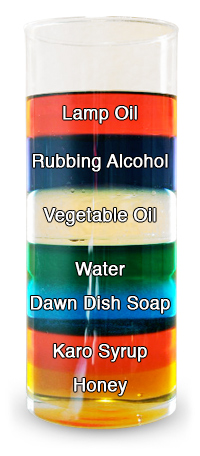
denisty columns - a challenge
Tuesday, September 28, 2010
Mon./Tues., Oct. 4/5, 2010
Objectives: Metric Converting & Begin discussion of density
Homework: Read pgs. 101-118
Review Boat & rock problem
Quizlet #2 - Measurement, Accuracy & Precision
Work on converting problems
Re-test boat & rock problem
Answers to Last weeks homework
Homework: Read pgs. 101-118
Review Boat & rock problem
Quizlet #2 - Measurement, Accuracy & Precision
Work on converting problems
Re-test boat & rock problem
Answers to Last weeks homework
Tues./Wed., Sept. 28/29, 2010
Objectives: To gather data and learn how to
convert from one system of measurement to another
Notebook evaluation
Quizlet grades & retakes
Measurement Medley (Collect data)
Sample conversions
Dimensional Analysis: Steps-by-step
More sample problems
Answers to Last weeks homework
convert from one system of measurement to another
Notebook evaluation
Quizlet grades & retakes
Measurement Medley (Collect data)
Sample conversions
Dimensional Analysis: Steps-by-step
More sample problems
Answers to Last weeks homework
Friday, September 24, 2010
Mon., Sept. 27, 2010
Quizlet: Physical & chemical properties & changes
Check/finish your previous work
Organize your notes and work
Please leave your notebooks
Answers to Last weeks homework
Check/finish your previous work
Organize your notes and work
Please leave your notebooks
Answers to Last weeks homework
Wednesday, September 22, 2010
Thurs. & Fri., Sept 23 & 24, 2010
Announcements: Hand in notebooks Monday at end of class
Don't forget the quizlet!
Bring calculators
New Homework: Reading pgs. 63-65 & 89-91
Problems pg. 96 Reviewing content #57, 75 & 76
pg. 97 Understanding Concepts #90
pg. 98 Critical Thinking #97 & 102
Concept Challenge #103, 105, 108
Additional sheet of conversion problems
Objectives: To learn how to use and calculate error
To understand conversion factors and
the process of converting between systems of measurement
Homework review
Answers to homework (click here)
Review results of lab
Error
Metric system
Conversion factors and converting between units
Don't forget the quizlet!
Bring calculators
New Homework: Reading pgs. 63-65 & 89-91
Problems pg. 96 Reviewing content #57, 75 & 76
pg. 97 Understanding Concepts #90
pg. 98 Critical Thinking #97 & 102
Concept Challenge #103, 105, 108
Additional sheet of conversion problems
Objectives: To learn how to use and calculate error
To understand conversion factors and
the process of converting between systems of measurement
Homework review
Answers to homework (click here)
Review results of lab
Error
Metric system
Conversion factors and converting between units
Tuesday, September 21, 2010
Tues./Wed., Sept. 21, 2010
Announcement: Bring your calculators
Objectives: Distinguish between examples of
chemical & physical reactions & changes
Questions about homework???
Answers to homework (click here)
Lab Activity...Chemical or Physical

Objectives: Distinguish between examples of
chemical & physical reactions & changes
Questions about homework???
Answers to homework (click here)
Lab Activity...Chemical or Physical
- special procedures
- safety
- Recording results
Thursday, September 16, 2010
Mon., Sept. 20, 2010
Objective: To demonstrate the Law of Conservation of Mass
Experiment: Use baking soda and vinegar to generate CO2 gas. Capture the gas with a balloon. Mass all the reactants & containers. Then mass all the products and the containers again. What did you find? Compare with others.
Answers to homework (click here)
Experiment: Use baking soda and vinegar to generate CO2 gas. Capture the gas with a balloon. Mass all the reactants & containers. Then mass all the products and the containers again. What did you find? Compare with others.
Answers to homework (click here)
Thurs./Fri., Sept. 16/17, 2010
Objectives: Continued thinking about chemical &
physical properties Focus on solution chemistry in
ocean acidification Additional ways to separate
mixtures Conservation of mass
Homework: Pg. 57 - Organizing Information
pg. 58 Reviewing Content #40, 52 & 54
pg. 59 # 57, 60-64, 66, 70, 72
Understanding Concepts #77
Activity: Properties of Materials
Article Analysis/Discussion: Ocean Acidification
Separating Mixtures

Conservation of Mass
physical properties Focus on solution chemistry in
ocean acidification Additional ways to separate
mixtures Conservation of mass
Homework: Pg. 57 - Organizing Information
pg. 58 Reviewing Content #40, 52 & 54
pg. 59 # 57, 60-64, 66, 70, 72
Understanding Concepts #77
Activity: Properties of Materials
Article Analysis/Discussion: Ocean Acidification
Separating Mixtures

Conservation of Mass
Tuesday, September 14, 2010
Tues./Wed., Sept. 14/15, 2010
Daily Objective: Be able to describe how
chemical & physical processes differ and
can be identified
Notifications: Take your textbook home. In-class sets.
Short activity: Detect the presence of carbon dioxide gas
from sodium bicarbonate and acetic acid. Problems:
How will you contain the reaction, how will you deliver
the gas and how much of each reactant will you use?

List of Physical Properties
List of Chemical Properties
Intensive vs. Extensive properties
States of Matter (Phase)
Whole chemical vs. physical lesson
chemical & physical processes differ and
can be identified
Notifications: Take your textbook home. In-class sets.
Short activity: Detect the presence of carbon dioxide gas
from sodium bicarbonate and acetic acid. Problems:
How will you contain the reaction, how will you deliver
the gas and how much of each reactant will you use?

List of Physical Properties
List of Chemical Properties
Intensive vs. Extensive properties
States of Matter (Phase)
Whole chemical vs. physical lesson
Monday, September 13, 2010
Mon., Sept. 13, 2010
Unit Pre-test
Take your book home
Assignment: Read all of chapter 2
Introduction to chemistry
"New substances" (or not?)
Take your book home
Assignment: Read all of chapter 2
Introduction to chemistry
"New substances" (or not?)
- Sugar & sulfuric acid
- Watch the video
- Pretty colors
- Watch it here
Tuesday, September 7, 2010
Thurs./Fri., Sept. 9/10. 2010
Objective(s): Be familiar with safety procedures
& equipment in the laboratory.
Highlights from syllabus
Stamp homework (baggie lab)
Safety discussion

Safety quiz
& equipment in the laboratory.
Highlights from syllabus
Stamp homework (baggie lab)
Safety discussion

Safety quiz
Thursday, September 2, 2010
Wed., Sept. 8, 2010
Welcome to Chemistry
I am Mr. Shaffer

Objectives: To see and experience
some of the indicators that a chemical
reaction has taken place.
Introduction to Chemistry - Activity:Baggie Lab
Homework: Finish answering the questions
Discussion next class
Read the syllabus & get it in your "notebook"
I am Mr. Shaffer

Objectives: To see and experience
some of the indicators that a chemical
reaction has taken place.
Introduction to Chemistry - Activity:Baggie Lab
Homework: Finish answering the questions
Discussion next class
Read the syllabus & get it in your "notebook"
Subscribe to:
Comments (Atom)